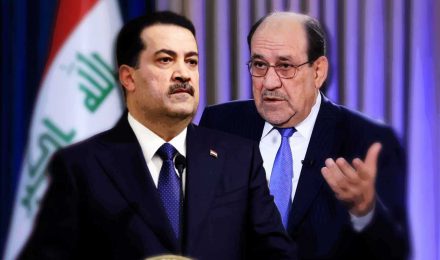


As the start of the election campaign approached, the streets of Baghdad and a number of governorates turned into an early arena for a propaganda war in violation of the law, as a number of candidates took the initiative to publish their pictures and political slogans before the date set by the Election Commission. Despite the clarity of the instructions prohibiting any propaganda activity before the official launch of the campaign, many candidates saw no harm in violating those instructions in an attempt to reserve prominent positions on sidewalks or building facades, and even rooftops, as if it was a “battle for existence” that must be won early. After myself...the fear of fading away Specialists in psychology and electoral behavior believe that the main motive behind candidates violating the laws is due to the “obsession with early appearance,” as the candidate fears that others will precede him in controlling vital spaces, thus losing his opportunity to attract the attention of the voter. This behavior, according to analysts, reflects a deep sense of mistrust in the mechanisms of fair competition, and the belief that the image and slogan posted earlier give their owner an advantage in the voter’s memory, even if that is at the expense of the law. Fines against prominent names The Independent High Electoral Commission announced the imposition of fines amounting to two million dinars against a number of candidates for violating advertising controls. The list included prominent political figures such as Prime Minister Muhammad Shiaa Al-Sudani, First Deputy Speaker of Parliament Mohsen Al-Mandalawi, and Head of the State of Law Coalition Nouri Al-Maliki, along with a number of other candidates from various blocs and alliances. Visual distortion and popular dissatisfaction In light of these early election propaganda, citizens expressed their dissatisfaction with the early scenes of “advertising chaos,” considering that whoever violates the laws in advertising may repeat the same thing when he assumes responsibility. Citizens wondered whether they could trust candidates whose pictures invaded the sidewalks prematurely, and the extent to which these candidates would respect the law if they reached Parliament. The instructions are clear...but the commitment is absent The Commission had issued strict instructions, stipulating that the electoral campaign should only begin during the officially specified period, and prohibiting the use of government buildings, mosques, or schools for propaganda purposes, as well as imposing financial penalties on violators. However, what is happening in reality reflects that these instructions are often read as “flexible guidelines” that can be violated with the will and willingness to pay the financial penalty. Influence race or software race? The current scene raises broader questions among the Iraqi street: Have the elections turned into a race for sidewalks and banners instead of an arena for competition over programs and visions? While the Commission insists that the law will apply to everyone without exception, the Iraqi citizen remains expectant, wondering whether this strictness will continue until polling day, or whether political influence will impose its say in the end.