

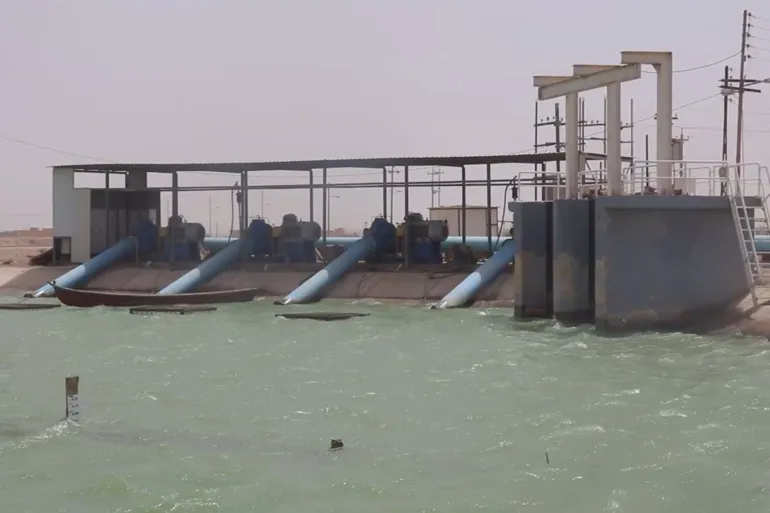
The member of the Iraqi Parliament for Basra Governorate, Abdul Amir Al-Mayahi, warned of a sharp deterioration in the water salinity crisis in the governorate, stressing that the budget allocated to solve the problem had failed to achieve its goals and that the situation had become unbearable from a health, environmental and living standpoint.
Al-Mayahi explained that the federal budget approved to address water salinity in Basra did not contribute effectively to improving the quality of drinking water, and that it did not lead to tangible results on the ground, calling for the need for the Ministries of Water Resources and Foreign Affairs to intervene to adopt a joint technical and diplomatic vision to address the crisis given the complexity of its internal and external dimensions.
The representative said that the salt tide had reached unprecedented levels in the history of the governorate, which led to the destruction of agriculture, a rise in skin diseases among the population, and their being forced to buy treated water from private desalination plants at exorbitant costs, adding that the continuation of this situation in a governorate that is considered one of the most important sources of oil income in Iraq is completely unacceptable.
These warnings come at a time when the water crisis in Basra has been worsening for several years due to the lack of water releases from the Tigris and Euphrates rivers, the creep of the salt tongue from the Arabian Gulf into the depths of the Shatt al-Arab, and the rise in salinity levels to levels exceeding international health standards, which has made water in many areas unfit for human or agricultural consumption.
Some areas of Basra have witnessed popular protests over the past months, with hundreds of residents coming out in neighborhoods such as Tamimiya, Hayyaniya, and Al-Ashar to demand immediate solutions to the water crisis, warning that ignoring citizens' voices could lead to broader social escalation.
Environmental specialists confirm that high water salinity not only threatens health, but also harms agriculture and livestock and negatively affects the quality of life in the governorate. Environmental reports also indicated that some existing desalination projects, such as the “Hartha” project, known as the Japanese project, face technical difficulties in dealing with high salinity levels that exceed the limits of their design capabilities.