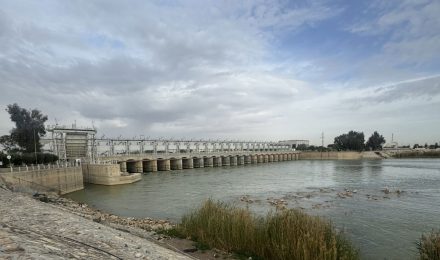


The Governor of Basra, Asaad Al-Eidani, announced the transfer of the seawater desalination project in the governorate, with a capacity of one million cubic meters per day, to a coalition that includes the Iraqi Al-Rida Group and the Chinese company Power China International, in a step described as perhaps the real opportunity to achieve the dream of fresh water that the people of Basra have long awaited. A strategic project to lift Basra out of the thirst crisis Al-Eidani said that the project is the largest seawater desalination project in the history of Basra, and aims to address the roots of the water scarcity crisis that the governorate has suffered from for many years, especially with the continued high levels of salinity in the waters of the Shatt al-Arab and the recurrence of waves of pollution. The project consists of three main axes: 1. Establishing an advanced water desalination plant using reverse osmosis (RO) technology, which is one of the latest and most efficient water desalination technologies in the world. 2. Establishing a dedicated power station to secure the necessary operational energy for the project independently and sustainably. 3. Extending transmission lines extending 240 kilometers to deliver desalinated water to nine main distribution points inside Basra. An international partner with extensive experience Al-Eidani pointed out that Power China International was chosen based on its proven track record in implementing huge water desalination projects in the region, including: • Al Taweelah project in Abu Dhabi, with a capacity of 900,000 cubic meters per day, which is the largest reverse osmosis desalination plant in the world. • Rabigh Project - Phase 3 in the Kingdom of Saudi Arabia, with a capacity of 600,000 cubic meters per day. • Jubail project in the Kingdom of Saudi Arabia with the same capacity. Beginning of the implementation phase The Governor of Basra stated that the implementing coalition has already begun mobilization and initial preparations at the project site, marking the start of the implementation phase during the coming period. Al-Eidani said: “We ask God that this project will be the beginning of goodness and development for the people of Basra who have long been patient and waited for real and sustainable solutions to the water crisis.” Basra Governorate has been suffering for decades from a worsening water crisis and high salinity in the Shatt al-Arab, as a result of climate change and a decrease in water flow from neighboring countries. The crisis led to thousands of poisoning cases being recorded during the summer of 2018 due to water pollution, and sparked widespread popular protests to demand urgent solutions. Despite repeated promises from previous governments, major water desalination projects in Basra were not implemented as required, making the thirst crisis the top priority for the people of the governorate. Observers believe that this project represents the greatest opportunity to break the cycle of crises that have besieged Basra for decades, but at the same time they stress that the success of the project depends on the speed of implementation and the efficiency of the local administration in following up on the technical stages and ensuring sustainability.