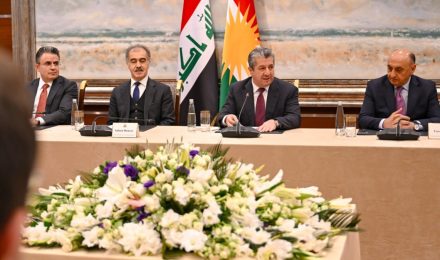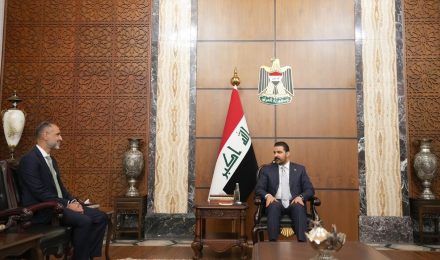

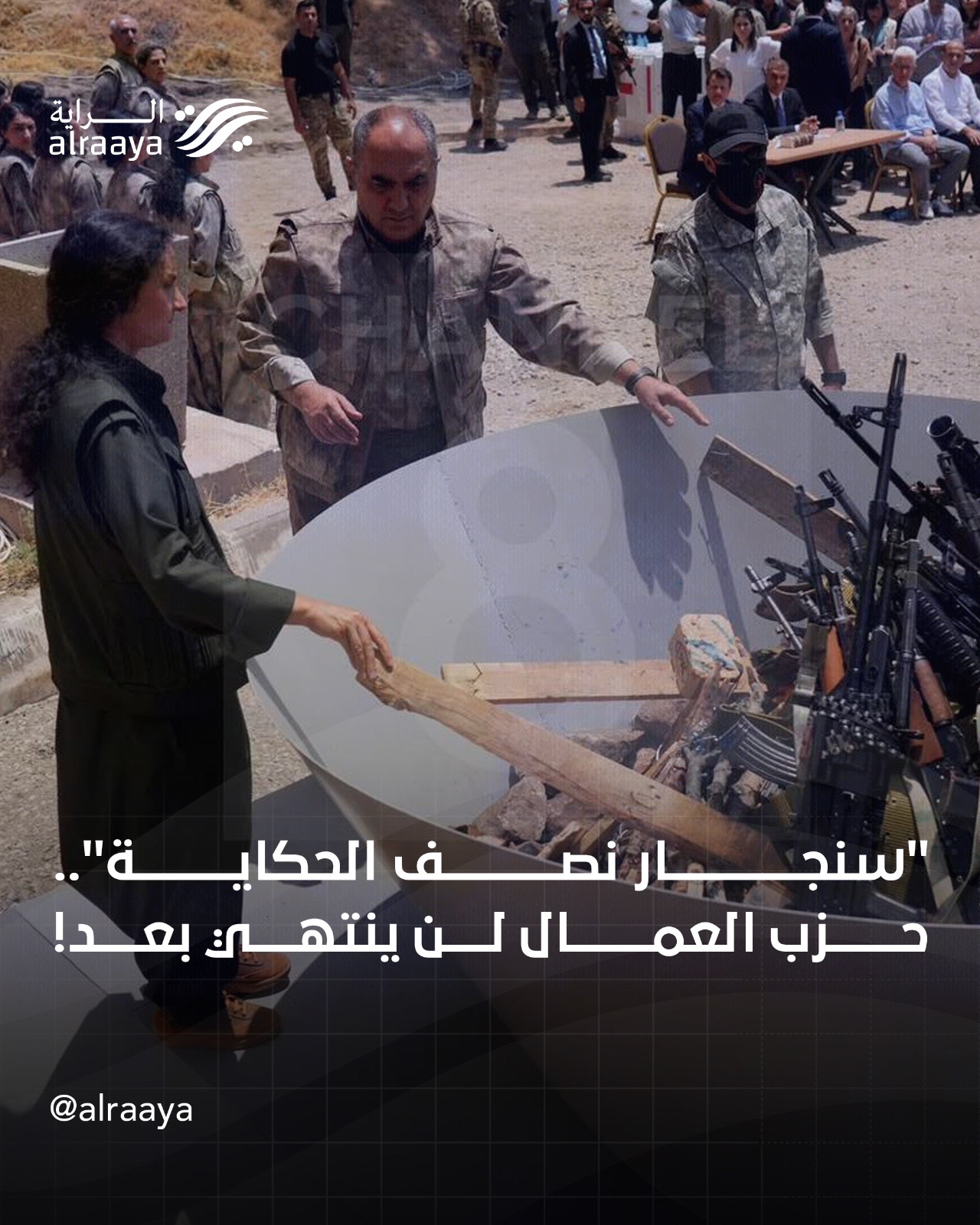
Today, Friday, the Kurdistan Workers' Party (PKK) took symbolic steps towards disarmament, through a ceremony that took place in Sulaymaniyah in the Kurdistan Region, and under the supervision of representatives from Turkey, Iraq, and the regional government, in a step that came in response to a call from the detained party leader, Abdullah Ocalan, to dissolve the party and move to political work, but the story will not end there.
The continuation of an armed wing in Sinjar
Despite the announcement of the dissolution in the central structure of the PKK, there are still armed forces actually affiliated with it in Sinjar, operating under different names, the most prominent of which are: the Sinjar Protection Units (YBŞ), which was formed in 2014 with direct support from the PKK, and consists mainly of Yazidi fighters and adopts the ideology of the “democratic nation” linked to Ocalan’s thought. There is also the Yazidi Women’s Units (YPJ-Şengal), which is an armed feminist organization linked to the same framework, as There is an Autonomous Administration organization in Sinjar. It is a civil-political entity, but it has armed support and follows the ideology of the Democratic Confederation.
Legal status
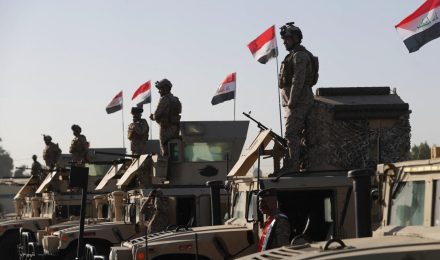
These forces are not officially recognized by the Iraqi government or the Kurdistan Region, and the “Sinjar Normalization” agreement signed between Baghdad and Erbil (2020) was rejected by these parties.
Why won't these wings commit to dismantling the PKK?
Although these factions are intellectually indebted to Öcalan, they do not consider themselves a direct administrative part of the PKK, and therefore do not see themselves bound by decisions to dismantle him.
The experience of the genocide that the Yazidis were subjected to at the hands of ISIS made many cling to the YBŞ units as a “self-protection” force, and giving up weapons without security guarantees and real political participation remains considered an unacceptable risk in their view. Some of these factions also benefit from regional balances and are used as a card of influence by unofficial parties in the region.
the future
Despite the dismantling of the PKK's central leadership, its wing in Sinjar did not announce its dissolution, nor did it hand over its weapons. It still has an effective military and organizational presence, which means that the ideological and political structure of the Workers' Party remains, even if the name or form changes.