
The scene seemed familiar, but this time it was more provocative, when the son of an official used his influence to subject an academic institution to the will of the “office,” not to the rules of the law.
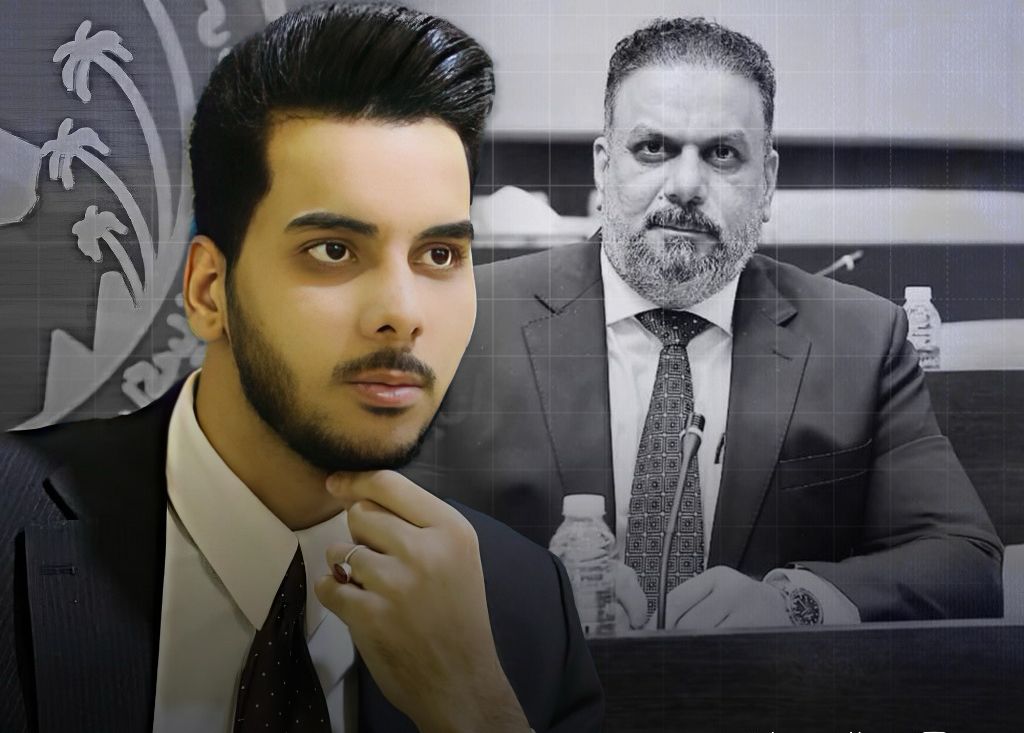
The incident that sparked widespread anger came from the University of Basra, after an audio recording was leaked that was said to belong to Hussein Al-Haidari, the son of MP Alaa Al-Haidari, speaking sharply and threateningly to the Dean of the College of Administration and Economics, against the backdrop of his refusal of a request related to granting a female employee permission to study for a master’s degree outside the country.
The imprint of a threat...and informal authority
The leaked recording, which spread quickly on social media, revealed an unusual tone of communication between a figure associated with a legislative institution and an academic dean who is supposed to enjoy independence in his decisions.
Hussein Al-Haidari, who holds the position of director of his father’s MP office, vowed in the recording to “transfer or dismiss the dean” because he did not implement a request bearing the signature of the Minister of Higher Education, and Al-Haidari personally supports him.
The representative’s son justified his position by saying that what happened was a clear disregard for the efforts made to “follow up on citizens’ affairs.”
From fathers to children... the inheritance of soft influence
This was not the first incident that put the children of officials under the microscope. Rather, it brought to the surface a broader discussion about what has become known as “genetic influence,” whereby children exercise informal authority, interfere in appointments, influence executive decisions, and deal with officials and institutions as if they were decision-makers.
Because many of them have no official status other than being “sons” or “office managers,” holding them accountable is more complicated, and transgressions often go silent or are justified as “individual behavior.”
Legally...a complaint opens the door to accountability
In light of what happened at the University of Basra, the Dean of the College, through his legal representative, filed an official complaint before the Third Basra Investigation Court against Hussein Al-Haidari, demanding that legal measures be taken against him.
At the same time, academic and legal voices rose demanding that the children of officials be held accountable, especially when they exert pressure or threats on state institutions, without any legal cover or official position that would entitle them to do so.
Between the position of the father and the authority of the son... who sets the boundaries?
On social media platforms, the most frequently asked question was:
“If this was his behavior as office manager, what if he held an official position?”
Many saw this incident as revealing the depth of the structural problem in the Iraqi state, where influence is not only exercised through positions, but also through family connections and political affiliations.
Observers believe that the continued official silence about such violations reinforces the idea of “inherited influence” and weakens the street’s confidence in state institutions.
Is the rule finally broken?
The incident of Representative Al-Haidari’s son may be an opportunity to test the state’s seriousness in imposing the law on everyone.
Many Iraqis, who received the recording with anger and sarcasm, only want one answer: Are money and children the path to power, or is the state capable of protecting its prestige from everyone?