
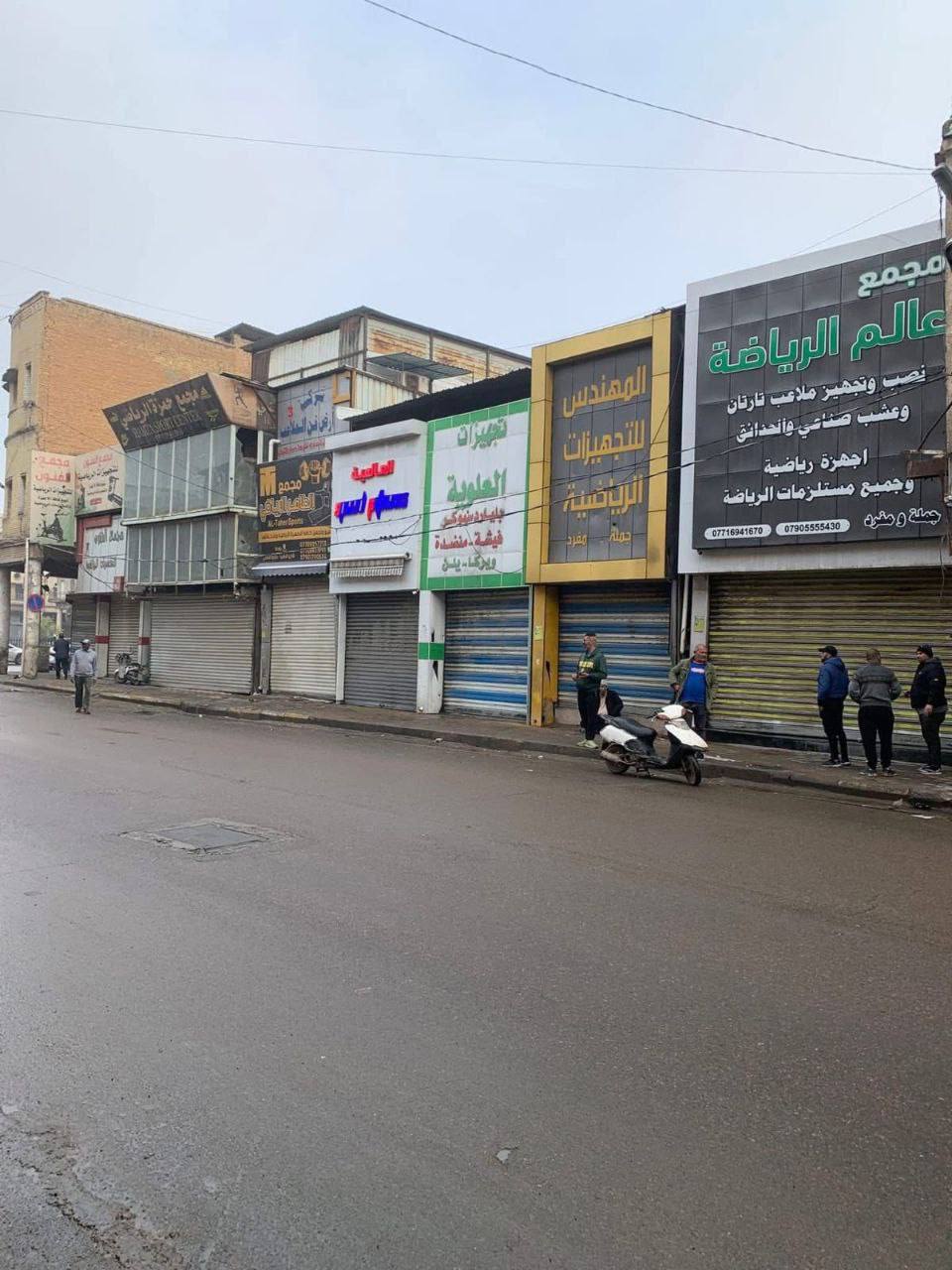
Economist Mustafa Hantoush warned that expanding the scope of the merchants' strike and closing markets could lead to more severe economic repercussions for citizens, calling for the adoption of dialogue as an alternative path to address the existing differences regarding recent government measures.
Hantoush considered that the protests witnessed in some markets were not surprising, pointing out that the government has become aware of the demands of traders, and has actually begun taking steps that he described as basic, most notably the adoption of the prior authorization mechanism, which he considered a necessary measure to limit money laundering operations.
He explained that the government decisions also included raising the customs valuation and container costs, noting in return that the government showed flexibility in the medicine file by restoring customs rates to their previous levels and reducing part of the total cost imposed on the goods.
He explained that the current scene reflects a fragile balance between official decisions and a case of legitimate commercial objection, especially in light of the recorded significant increases in the prices of some commodities, which, in his opinion, requires a careful review of the economic impacts away from tense reactions.
Hantoush stressed that continuing the discussion and presenting demands within dialogue channels is more useful than a strike, warning that reducing the supply in the markets will open the way for speculators and push prices to rise further, at a time when the market cannot tolerate additional pressure.
He concluded by calling for consultation between merchants and the government, stressing that solutions remain closer when the dispute is managed with economic reason and not with the logic of closure and escalation.