
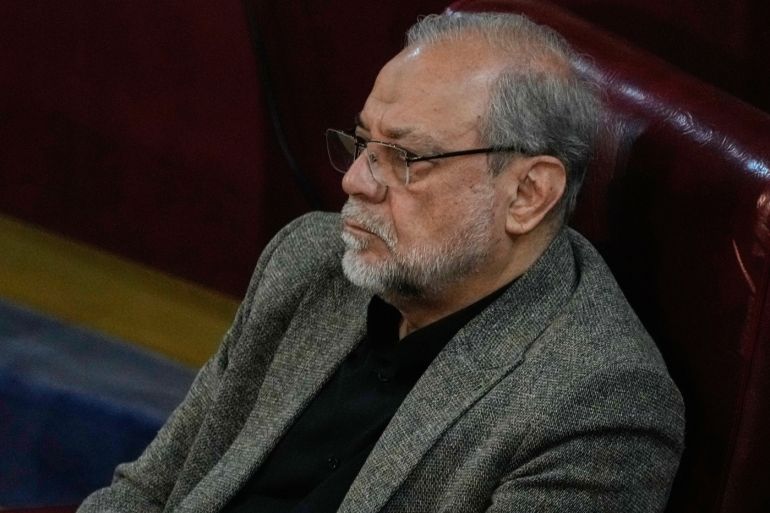
A report published by Al Jazeera Net shed light on the rise of the personality of Muhammad Baqir Zulqadr within the Iranian power hierarchy, after his appointment as Secretary of the Iranian Supreme National Security Council, at a moment described as the most dangerous and sensitive in Iran’s modern history, amid military escalation and unprecedented international pressure.
The Supreme National Security Council is considered one of the most important governing institutions in Iran, as it is responsible for managing major security files, including defense policy, the relationship with the West, the nuclear program file, regional crisis management, and decision-making coordination between the government, the army, and the Revolutionary Guard.
Who is Muhammad Baqir Dhu al-Qadr?
According to the report, Dhu al-Qadr is classified among the figures formed within the revolutionary system since its beginnings, and over the decades he has been able to build broad influence within the security and military services, making him one of the most prominent “shadow men” who usually move behind the decision, not in front of it.
Al Jazeera describes him as “the architect of the security state,” a phrase that refers to his role in re-engineering security institutions and controlling the political rhythm inside Iran, especially during periods of crises and major transformations.
Military background and influence within the Revolutionary Guard
Zulqadr has a long history in the Iranian Revolutionary Guard, an institution that has become the most important player in Iranian politics in recent decades, not only militarily but also economically and politically.
Al Jazeera points out that the man was associated with the most solid security movement within the country, and that his appointment to this sensitive position cannot be separated from the regime’s desire to introduce a “firm” personality with long experience in managing heavy security files.
His appointment is not an administrative one, but rather a political message
The report believes that Zulqadr’s arrival to this position is not read as a routine change, but rather as a clear political signal that Tehran is moving towards rearranging its security institutions and raising the level of militancy in dealing with challenges, whether internal or external.
Observers also consider that his appointment reflects the desire of the ruling establishment to fill any potential vacuum within the security decision-making circle, especially with the acceleration of events and the increase in the pace of regional confrontations.
The “earthquake” phase and the re-arrangement of the Iranian house
The report links the appointment to a period described as an “earthquake,” in reference to the security unrest and strikes that Iran has been subjected to during the recent period, and the accompanying internal movements to reorganize the centers of power and influence.
According to Al Jazeera’s analysis, choosing a figure like Zulqadr means that Tehran wants to ensure that the next stage is managed with a “security” mentality rather than a political or diplomatic one, especially since the Supreme National Security Council is the one that holds the strings of the final decision in major crises.
What does this decision mean for Iran?
The report confirms that Dhu al-Qadr does not merely represent a new official, but rather represents a security approach within the Iranian state, as his rise may be reflected in the nature of dealings internally, whether with regard to protests, opposition movements, or political conflicts within the centers of government.
It is understood from the context that the Iranian regime seeks to tighten control and close any loopholes that could be exploited in light of external escalation.
Potential impact on Iran's regional policy
According to the report, the man’s military and security background may also be reflected in Iran’s foreign files, especially with regard to its regional relations and its presence in traditional areas of influence.
Analysts believe that the next stage may witness an escalation in the language of deterrence or a tightening in the Iranian strategy, because the decision is in the hands of a figure affiliated with the solid security school.
The Supreme Council for National Security...the real joint of the state
The report indicates that the position of Secretary of the Supreme National Security Council is not a protocol position, but rather one of the most important joints that control:
• The form of the Iranian military response
• Tehran’s policy towards the United States and Israel
• The nature of the relationship with the major powers
• Managing the nuclear file
• Coordination between the presidency, the Revolutionary Guard, and sovereign institutions
Therefore, Zulqadr’s choice of this location means that Iran is dealing with the stage as a long “phase of nerve warfare,” requiring complex security management