
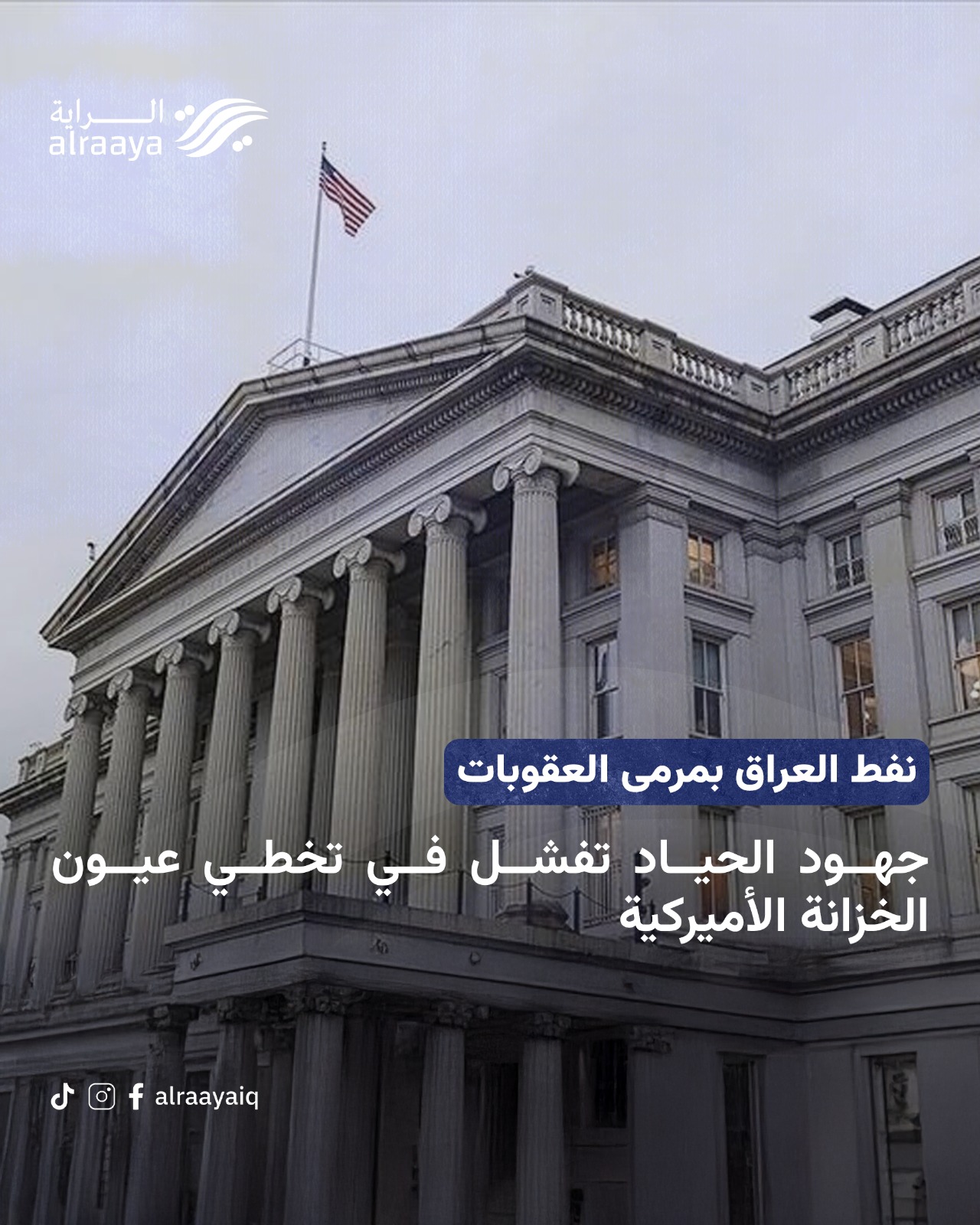
The US Treasury Department, through the Office of Foreign Assets Control (OFAC), imposed a new round of sanctions targeting international networks under the pretext of facilitating Iranian oil trade, including a network of Iraqi companies run by businessman Salim Ahmed Saeed.
This measure comes at a critical time when Iraq is facing complex economic challenges, as the Iraqi government seeks to maintain a position of neutrality and not engage in regional and international conflicts.
Iraq between regional and international pressures
These sanctions highlight the amount of pressure on Iraq, as it finds itself at a complex intersection of interests between conflicting international parties. Observers of Iraqi affairs confirmed to Al-Raya that Baghdad is working hard to distance itself from any alignment, and is seeking to adopt a “buffer zone” policy to preserve its political and economic stability, but the continuation of US sanctions on Iraqi companies may confuse the local market and exacerbate the pressures on the Iraqi economy.
Details of penalties
According to a statement by the US Treasury Department, the sanctions targeted a network of companies managed by Salim Ahmed Saeed, accused of smuggling Iranian oil by mixing it with Iraqi oil and passing it on regional and international markets using complex camouflage methods.
The sanctions also included ships participating in illegal transportation operations that were included in what is known as the “shadow fleet,” which observers described as doubling restrictions on transportation and export operations in the region.
The impact of sanctions on Iraq
Analysts believe that these measures may have direct economic impacts on Iraq, especially if they affect companies operating within the Iraqi logistics system for a long time, or if they create a state of caution in dealing with Iraqi commercial institutions for fear of being exposed to secondary sanctions.
International economic experts stressed that “expanding sanctions in this way may complicate Iraq’s efforts to develop its oil and commercial sector, and also put it in a difficult position between international obligations and the requirements of its internal stability.”
Political observers also pointed out that Iraq “has been struggling for years to break out of the cycle of polarization and attempts to involve it in proxy wars,” stressing that the recent measures may threaten Baghdad’s efforts to establish a policy of neutrality.
Washington's position
The US Treasury Department explained in its statement that the sanctions came pursuant to Executive Order No. 13902, as part of an ongoing campaign to disrupt the funding sources of some regional parties.
Treasury Secretary Scott Besent said, “The United States will continue to target sources of funding for activities that it deems a threat to stability in the region.”
The US sanctions reopen a sensitive file for Iraq, which is striving to avoid entering into a conflict with the axes, amid popular and official aspirations to maintain economic security and not involve the country in proxy economic battles.